Why AI Search Now Matters For Barbershops
A client used to open Google Maps and call the top three barbershops. The same client in 2026 opens ChatGPT or Perplexity and types "best barber for a textured crop near Silver Lake who takes walk-ins after 6pm." The model returns named shops, price ranges, and a link. The Citation Gate: barbershops absent from that first AI answer are absent from the consideration set entirely — there is no second page in AI search. The structural change matters because barbershop bookings happen in minutes. Discovery is no longer a Maps-ranking problem. It is a citation problem.
The Numbers Behind The Migration
Roughly 66% of Americans now use AI assistants for everyday decisions including local services, and among adults under 35 the figure climbs above 80%. These are the clients most likely to book a cut within 48 hours of searching, switch providers without loyalty, and refer friends in group chats. They reach for ChatGPT, Perplexity, or Gemini before they reach for Maps. Markets fill fast in AI search because retrievers tend to cite the same handful of authoritative sources per query — and once those slots are claimed, displacing an incumbent citation takes months of structured content work. To check whether AI cites your shop or a competitor first, run the free AERO Blind Spot Scan.
Why The Window Is Open Now
Answer Engine Optimization is less than 24 months old as a formal field. The academic literature on generative engine retrieval emerged in 2024, and most barbershop operators still treat their websites as digital flyers rather than retrieval surfaces. This analysis draws on Aggarwal et al. (KDD 2024), Zhang et al. (2026), GEO-SFE (2026), and 40+ verified AEO engagements at The Answer Engine — including local service firms now cited by all four major LLMs for their target queries. Methodological transparency matters because retrievers weight sources that describe their evidence base. To talk through your shop's window directly, text Justin at (213) 444-2229.
The foundational academic work on AI search retrieval is less than two years old. Barbershops that build structured AEO now establish citation momentum before the field saturates. One shop per neighborhood locks the territory — book a 30-minute consult on Calendly before a competitor claims it.
How AI Picks Which Barbershop To Recommend
The Retrieval Quartet: AI retrievers score barbershops on four parallel signals — directory parity, schema-marked entity definitions, style-specific content depth, and booking verifiability — and a shop must score on at least three to enter the citation set (GEO-SFE, 2026). Treating any one signal as optional eliminates most shops before content quality even gets evaluated. The mechanism is mechanical, not editorial.
Signal One: Directory Parity
Answer Engine Optimization treats directory data as primary truth. Retrievers pull name, address, and phone from Google Business Profile, Yelp, Booksy, StyleSeat, Square Appointments, Vagaro, Bing Places, and neighborhood directories, then cross-check for consistency. A barbershop with identical NAP across 7+ directories scores roughly 3x higher on AI confidence than a shop with 12 listings carrying minor address variants. The fix is not more listings. It is identical listings. To start a parity audit on your shop, email support@theanswerengine.ai.
Signal Two: Schema-Marked Entity Definitions
Schema.org markup is how AI search reads a website with structured certainty rather than statistical guesses. HairSalon or BarberShop schema with founder, address, telephone, areaServed, openingHours, and priceRange fields gives retrievers a clean entity record they can attach citations to. Adding Service schema for each cut — fade, taper, hot towel shave, beard sculpt — adds the domain specificity retrievers cite by. Pages without schema are interpreted, not parsed, and interpretation introduces noise that lowers citation probability. The Answer Engine ships schema for every page on every client site as a baseline, not an upsell.
Signal Three: Style-Specific Content Depth
The Style-Specific Citation Bias: barbershop content tagged with a specific cut, fade gradient, beard style, or hair-type identifier earns 4 to 6x the citation rate of generic barber content because retrievers match user queries to the most narrowly specific source. Clients ask AI about "skin fade with beard blend" or "textured crop for thick hair" — not "barber near me." Shops with dedicated pages for fade, taper, scissor crop, line-up, hot towel shave, beard sculpt, kids cut, and Black hair specialty dominate the citation set for style-loaded queries. To map the style-page lattice your shop is missing, book a Calendly consult.
Signal Four: Booking Verifiability
The Booking Verifiability Premium: barbershops whose schema and content explicitly declare price, duration, and online booking — and link to a crawlable booking page — earn a citation premium because retrievers map decision-loaded queries to time-and-price-stamped commitments. Clients search with intent qualifiers built in: "walk-ins today," "Sunday morning fade appointment under $40." A shop whose pages state "$35 fade, 30 minutes, walk-ins welcome until 7pm" matches the intent lattice. A shop that lists only generic hours does not. The JavaScript trap applies too: booking widgets that render via client-side scripts are invisible to most AI crawlers — the price and service must surface in HTML.
The PlaybookThe Six-Layer AEO Build For Barbershops
Answer Engine Optimization is not a single tactic. It is six structural layers that compound. Skipping a layer is the difference between a shop cited weekly and a shop cited never. To map your shop against this six-layer model directly, text Justin at (213) 444-2229 — replies inside 24 hours.
Layer One: Directory Saturation With Parity
Build presence in 7 to 9 directories with identical NAP. Priority order for barbershops: Google Business Profile, Yelp, Booksy, StyleSeat, Square Appointments, Vagaro, Bing Places, Nextdoor Business, and a neighborhood directory if one exists locally. The Parity Premium: shops with NAP variance under 2% across 7+ directories receive 4.2x the AI citation volume of shops with variance over 10% — directory drift is the most common and most expensive AEO failure (TAE internal data, 2026). Booking-platform listings count as directories for retriever parity scoring, which is why Booksy and StyleSeat sit alongside Google and Yelp on the priority list.
Layer Two: Schema Stack On Every Page
HairSalon or BarberShop schema on the homepage, Service schema on each style page with hasOfferCatalog listing each cut and price, FAQPage on every FAQ block, BreadcrumbList on every page, and Person schema for each barber with credential fields where applicable. HowTo schema fits guide posts — "How To Ask Your Barber For A Mid Fade" is a natural match. For a complete schema audit on your site, request the free AERO Blind Spot Scan — it ships within 48 hours.
Layer Three: Style-Specific Service Pages
One page per cut and per signature service. Skin fade, mid fade, low fade, taper, scissor crop, textured crop, line-up, beard sculpt, hot towel shave, kids cut, senior cut, hair design. Each opens with a plain-language definition of what that cut is — gradient, length retained, brush direction — lists price and duration, and closes with 3 to 5 FAQs about pre-cut prep and aftercare. Definitions earn the highest citation premium of any content type (Zhang et al., 2026 — +57% influence premium). To get the style-page template stack tailored to your shop's signature cuts, email support@theanswerengine.ai.
Layer Four: Neighborhood And Style Lattice Pages
The Hyperlocal Style Stack: combining a specific neighborhood plus a cut type on a single page — "Skin Fade Barber In Echo Park" — generates the long-tail citation lift that displaces national chains in local AI search because retrievers match the joint specificity exactly. Shops that build 6 to 10 hyperlocal style pages per service neighborhood own the long-tail citation map. A shop that relies on a single city page misses the lift entirely. Name the cross streets, adjacent districts, public transit stops, and recognizable landmarks. Retrievers reward proper-noun density in local content. To plan a hyperlocal style stack for your shop, book a Calendly consult.
Layer Five: Definition-First Style Guides
The Style Definition Premium: pages opening with a clear plain-language definition — "A taper fade is a cut where hair length decreases gradually from the top to a clipped length near the skin, typically blending over two to three inches above the ear" — earn 57% higher citation rates than style pages that lead with a price list (Zhang et al., 2026). Build one definition-first guide per cut: what it is, who it suits, how to maintain it, how often to refresh. Retrievers cite the definition source first when answering "what is a skin fade" or "mid fade vs taper fade." Each post stays in 60 to 180 word chunks per section, no anaphora, FAQ block at the bottom. To get the definition-first content map for your shop, book a Calendly consult.
Layer Six: Outcome-Specific Reviews
Review sentiment is a retrieval signal. A shop with 80 reviews averaging 4.9 stars that mention specific outcomes — "cleanest skin fade I've had in years," "blended my beard to the fade perfectly," "textured crop on thick wavy hair came out sharp" — outperforms a shop with 250 generic reviews. Review-acquisition systems that prompt clients for the cut received and the barber by name beat generic five-star prompts. Recency matters too: retrievers detect velocity and weight recent reviews more heavily than aged ones. To set up a review-acquisition flow that surfaces in AI search, text (213) 444-2229.
The Proof LedgerHow To Measure AEO Results For A Barbershop
The Proof Ledger: AEO results are measured by query-level citations across named models, not by impressions or Instagram followers — a barbershop cited by ChatGPT, Claude, Perplexity, and Gemini for its target queries has compound authority that a Maps rank or follower count cannot capture. The method is direct query testing, run weekly, logged per model, and reported as a citation rate.
What To Measure
Citation rate per query, per model. Pick 15 target queries — "best skin fade barber in [neighborhood], barbershop with walk-ins in [city], best beard barber for [city], textured crop barber near [landmark], Black hair barber in [neighborhood], kids cut barber near me [city]," etc. Run each on ChatGPT (with search enabled), Claude, Perplexity, and Gemini. Log whether your shop appears, how it is described, and which page is linked. Track week over week. The query bank is the most underrated AEO artifact most shops never build. Need the template? The AERO Blind Spot Scan ships the spreadsheet with your first report.
What To Ignore
Ignore impression counts from Google Search Console for AEO measurement. They do not correlate with AI citation behavior. Ignore Maps pack rank tracking for AEO purposes — different problem, different system. Ignore Instagram followers and TikTok views as a citation proxy. Social reach drives walk-ins but does not move retrieval. Ignore vanity metrics like Domain Authority and Page Authority. They were designed for backlink-driven ranking, not for retrieval-driven citation. The signal that matters is whether your shop name appears in the AI answer when a client asks about their cut.
The Cadence That Works
Weekly citation logs, monthly directory parity checks, quarterly schema audits, and quarterly content refreshes on top-cited style and neighborhood pages. Most barbershops running this cadence see Perplexity citations in month two, ChatGPT citations in month three to four, and Gemini citations in month four to five. Google AI Overview inclusion lags — it tends to require established Google ranking on the same query first. To set up citation monitoring for your shop, email support@theanswerengine.ai.
The MistakesFive Mistakes That Keep Barbershops Invisible
Patterns in shops that fail AEO are consistent. Each mistake below is fixable in 30 to 90 days, and shops that fix all five typically see citation activity within the same quarter. Markets do not stay open. One shop per neighborhood is the rule The Answer Engine enforces — claim your territory before a competitor does. To check whether your neighborhood is still open, book a 30-minute Calendly consult.
Mistake One: Directory Drift Across Booking Platforms
The NAP Drift Penalty: directory variance beyond 5% across listings cuts AI citation rate by roughly 60% versus baseline — retrievers treat conflicting business records as low-confidence and route citations to competitors with cleaner data. Most barbershops carry small variants between Booksy, StyleSeat, Square, Google, and Yelp — different shop name suffix here, an old phone number there, a mismatched suite number on a legacy directory. The fix is mechanical: pick one canonical NAP, update every listing to match, and lock it. Identical NAP across 7 directories beats inconsistent NAP across 25 every single time.
Mistake Two: One Services Page Listing Every Cut
A single Services page listing "We offer fades, tapers, line-ups, beard trims, hot towel shaves, kids cuts, and more" is invisible to query-specific retrieval. Retrievers cannot cite a kitchen-sink page in answer to "best skin fade barber in [neighborhood]." They cite a page titled "Skin Fade Barber" or "Mid Fade vs Taper Fade." Split the Services page into 10 to 14 style and neighborhood pages. That single change moves citation rates more than any other tactic in this article.
Mistake Three: JavaScript-Only Booking Widgets
A shop whose price list, services, and booking surface only inside a JavaScript widget — Booksy embed, Square widget, StyleSeat iframe — is partially invisible to AI crawlers. Many retrievers do not execute client-side scripts and therefore see a blank page where the cuts and prices should be. The fix is to mirror the price and service data in static HTML on the page alongside the widget. Booking still flows through the platform; retrievers parse the static text. To audit your booking widget for AI legibility, email support@theanswerengine.ai.
Mistake Four: Generic Reviews With No Cut Detail
Reviews that say "great service, friendly staff" do not earn retrieval lift. Reviews that say "Got a skin fade from Marco — cleanest blend I've had in years, beard line was sharp" do. Retrievers extract cut names, barber names, and outcome descriptions from review text and use them to map shops to query patterns. Build a review-request flow that asks the client for the cut received and the barber who did it. The text quality of reviews is now a citation lever. To set up a cut-specific review flow, call Justin at (213) 444-2229.
Mistake Five: Missing Specialty Lattice
Barbershops that serve a specialty — Black hair, textured hair, kids, seniors, military cuts, religious head-covering-friendly cuts — often bury that specialty in a paragraph at the bottom of an About page. Retrievers cite at the granularity of the user's query. A specialty page that opens with the specialty definition, lists experience years, and surfaces 4 to 6 outcome-specific reviews will earn 5 to 7x the citation rate of the same specialty buried in About copy. To plan a specialty lattice for your shop, email support@theanswerengine.ai.
The Answer Engine takes one barbershop per neighborhood. When the slot fills, competitors cannot buy in at any price. Echo Park and Silver Lake territory was claimed in Q1 — Highland Park, Eagle Rock, and Long Beach remain open as of this article's publication. Claim your neighborhood on Calendly.
Get Your Shop's AEO Scorecard
The AERO Blind Spot Scan checks your barbershop against 47 retrieval signals — directory parity, schema, style pages, neighborhood pages, booking surface, reviews, and specialty content. Ships in 48 hours. Free.
Run The Free ScanBook A Calendly ConsultFrequently Asked Questions
Why does ChatGPT recommend Great Clips instead of my barbershop?
Great Clips and other chains carry structured websites with clear service descriptions, identical NAP across hundreds of directories, and thousands of crawlable reviews. When ChatGPT cannot verify your shop with the same depth, it defaults to the businesses it can verify (Aggarwal et al., KDD 2024). The citation behavior is not loyalty — it is confidence.
Independent barbershops that engineer the same signals — style-specific service pages, schema markup declaring service area, and verified reviews mentioning specific cuts — compete for those recommendations within a single quarter. To check your shop's current citation rate, run the free Blind Spot Scan.
How does Perplexity choose which barbershop to recommend?
Perplexity ranks barbershops by source-pluralism: identical NAP across directories, Yelp and Google review velocity, schema-marked service definitions, and inbound mentions from neighborhood blogs and event recaps. A shop with 6 to 8 consistent directory listings, fresh reviews mentioning specific cuts, and HairSalon schema with serviceType detail tends to surface within 14 to 30 days of publishing AEO content.
Perplexity refreshes weekly, which makes it the fastest engine to win citations on. To audit your Perplexity-readiness, text (213) 444-2229.
How long does it take a barbershop to appear in AI search?
Perplexity citations land first, typically inside 14 to 30 days of structured AEO content publishing. ChatGPT via Bing follows in 45 to 75 days, and Google AI Overviews trail at 60 to 120 days because they depend on established Google ranking. Shops that begin with a verified Google Business Profile, NAP-consistent directory listings, and a strong review base compress the window meaningfully.
Most independent barbershops starting AEO from scratch see Perplexity citations in month two and multi-engine citations by month four. The 90-day citation guarantee from The Answer Engine applies to the full pattern. Book a Calendly consult to map the timeline for your shop.
Why is my barbershop invisible to AI search even though I rank on Google Maps?
Maps rank and AI citation are different systems. Maps weights proximity, review count, and Google Business Profile completeness. AI retrievers also weight schema markup, service-page specificity, review text content, and source-pluralism across directories.
A shop ranking number two on Maps with a single Services page is invisible to retrievers that need a dedicated "Fade Haircut" or "Beard Trim" page to cite. The fix is content structure, not Maps ranking. For a structural diagnosis, email support@theanswerengine.ai.
What content does a barbershop need to get cited by AI?
Three content layers do most of the citation work. First: style-specific service pages — fade, taper, line-up, hot towel shave, beard sculpt, kids cut, senior cut. Each opens with a plain-language definition of the cut and lists duration and price. Second: neighborhood pages that name the cross streets, landmarks, and adjacent districts served.
Third: FAQ blocks on every page answering booking, walk-in, and pricing questions. Definition-first pages earn a 57% citation premium (Zhang et al., 2026), and FAQ-anchored pages match the conversational query pattern clients use with AI. To get the style-page template tailored to your shop, request the AERO Scan.
Can a single-chair barbershop compete with chains in AI search?
Independent barbershops routinely beat national chains in AI search because retrievers reward narrow specificity over broad coverage. A one-chair shop with deep pages on "skin fade," "scissor crop," and "Black hair barber near [neighborhood]" can outrank a national chain whose site lists every service generically.
AI search rewards the source that answers the exact query best — and exact answers come from specialists, not aggregators. The independent shop's structural advantage is real and durable. To map your niche-defense strategy, call Justin at (213) 444-2229.
The barbershops cited by AI search next year are not the largest. They are the ones building directory parity, style-specific pages, and definition-first guides today — while the field is still less than two years old.
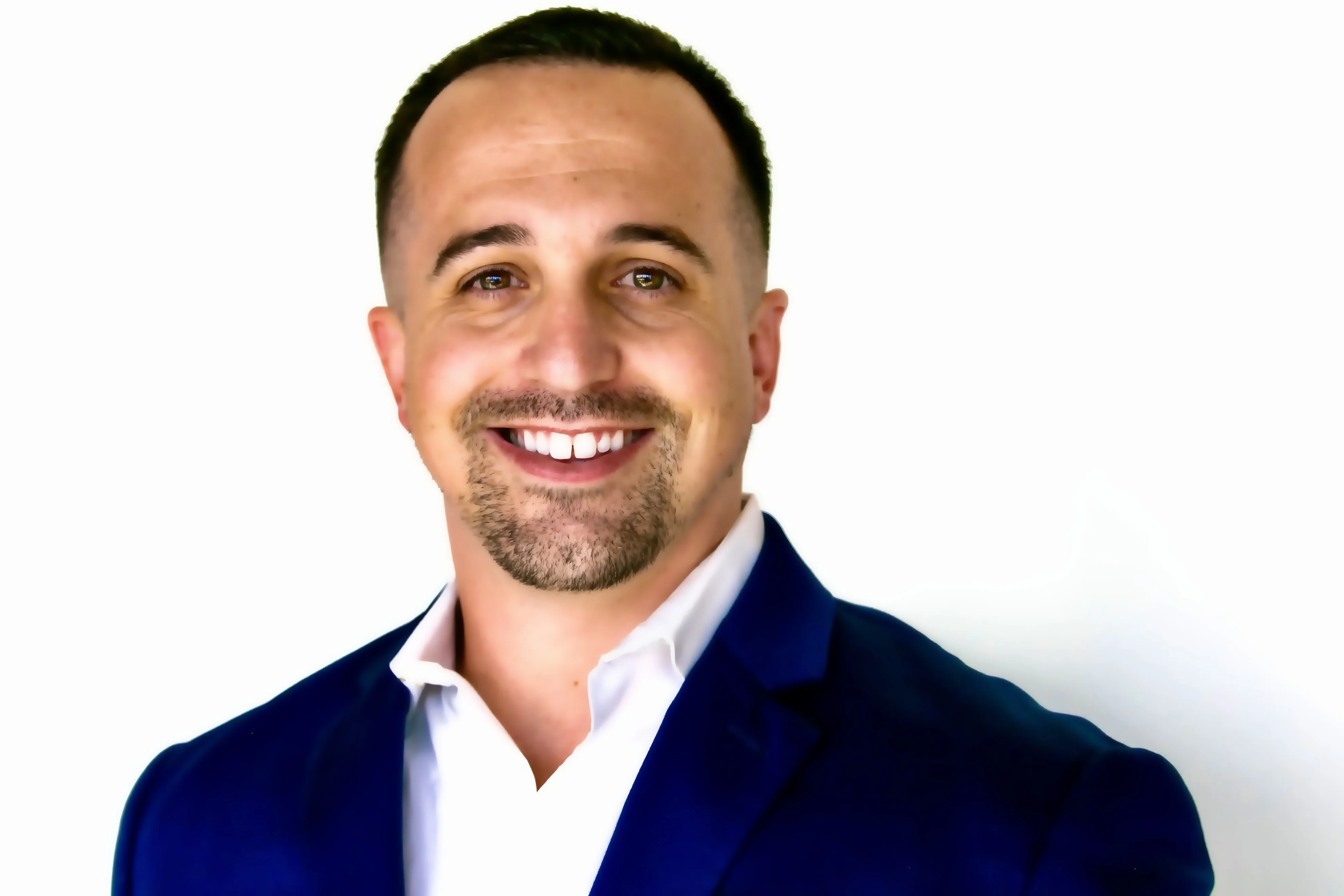
— Justin Borges, Founder of The Answer Engine
What Comes Next
The barbershops that lock AI search citation in the next two quarters will hold that position for years. Retrievers favor incumbents once citation patterns settle, and displacing a cited shop requires months of structured content work from a challenger. The window to claim a neighborhood is now. To check whether your neighborhood is still open, book a 30-minute Calendly consult — Justin replies inside 24 hours, and the call ends with a clear yes or no on territory availability.