- Why PI Law Is Uniquely Competitive in AI Search
- What AI Actually Says When Asked for a PI Lawyer
- The 4 Content Types That Get PI Firms Cited
- Why Each Case Type Needs Its Own Content Strategy
- How Avvo, Martindale, and Google Feed AI Differently
- The BERT Entity Problem: How AI Confuses Similar Firms
- 90-Day Action Plan for PI Firms with Zero AI Visibility
- Frequently Asked Questions
Why Personal Injury Law Is Uniquely Competitive in AI Search
Personal injury is one of the most expensive legal verticals in paid search — cost per lead runs between $50 and $300 depending on case type and market. That economics reality means PI firms have spent decades engineering visibility in traditional search. But AI search plays by different rules, and the PI firms winning on Google Ads are often invisible on ChatGPT. Your first step: free AERO Blind Spot Scan.
Three factors make PI uniquely hard to crack in AI search. First, these are high-stakes, low-trust queries. Someone who just got hurt in a car accident does not want a list of options — they want the right answer delivered with confidence. AI platforms respond to that intent by being selective about who they recommend. Second, PI is intensely geographic. “Best personal injury lawyer in Houston” and “best personal injury lawyer in San Antonio” are completely different evidence pools for AI. A firm with city-agnostic content will get cited in neither. Third, PI covers a wide range of case types — car accidents, slip and fall, medical malpractice, workers compensation — each of which generates its own query pattern and requires its own content footprint.Claim your free call before your market fills.
The result: most PI firms have strong traditional SEO footprints and effectively zero AI citation presence. That gap is the opportunity. Reach out: support@theanswerengine.ai.
AI platforms apply a higher credibility bar to legal, medical, and financial queries than to most other categories. This is not a disadvantage for PI firms — it is a moat. Firms that build the right evidence base will be cited consistently while low-quality competitors get filtered out entirely. Call us at (213) 444-2229 today.
What AI Actually Says When Asked for a PI Lawyer
When someone types “best personal injury lawyer in [city]” into ChatGPT or Perplexity, the response does one of three things: it names specific firms with citations, it gives a generic framework for finding a lawyer without naming anyone, or it defers to directories like Avvo and Martindale. Most PI firms fall into the second or third bucket.Lock in your exclusive territory now.
The firms that get named by AI share a consistent profile. They have published content that directly answers the questions injury victims ask. They have documented their case experience in specific, citable terms. They appear in multiple third-party sources — legal directories, local news, community mentions — not just their own website. And they have structured data in place that tells AI crawlers exactly what type of law they practice, where they practice it, and what outcomes they have achieved.Get your free AI readiness report.
The absence of any one of these creates a gap. A firm with deep content but no third-party mentions will not get cited. A firm with strong reviews but no structured content will be recommended only when a user asks about a review platform directly. AI requires the full signal stack to deliver a confident recommendation. Ready to act? Book a free strategy session.
Based on AEO analysis across PI firm citation patterns in 15 US legal markets Drop us a line at support@theanswerengine.ai.
The 4 Content Types That Get PI Firms Cited
Not all content drives AI citations. For personal injury specifically, four content formats consistently appear in the evidence base of firms that get recommended by AI platforms. These are not generic SEO content types — they reflect what injury victims actually ask and what AI systems need to make a confident recommendation. Speak to an AEO specialist: (213) 444-2229.
| Content Type | Why AI Cites It | Example Query It Wins |
|---|---|---|
| Case result content | Provides specific, citable outcomes that answer “does this firm win?” | “car accident lawyer with proven results in [city]” |
| FAQ and legal explainers | Matches the exact format of AI responses — direct answers to direct questions | “how long does a personal injury case take?” |
| Local jurisdiction knowledge | Establishes geographic specificity AI needs to make a city-level recommendation | “best slip and fall lawyer in [specific city]” |
| Client outcome narratives | Third-person evidence of real results that AI treats as peer validation | “personal injury attorney who gets results for accident victims” |
Case Result Content
The most powerful single content asset for a PI firm's AI visibility is a case results page with specific outcomes. Not “we recovered millions for our clients” — that tells AI nothing. Instead: case type, injury description, liability context, settlement or verdict amount, and timeline. Even without client names, this level of specificity gives AI platforms citable claims. A result like “$1.2M settlement for a rear-end collision resulting in L4-L5 herniation, resolved in 14 months” can be cited in response to a dozen different queries. One client per city. See if your market is available.
FAQ and Legal Explainer Content
Injury victims ask very predictable questions: how much is my case worth, what happens if the other driver is uninsured, how long do I have to file, will I have to go to court. PI firms that publish direct, specific answers to these questions in FAQ format — with proper FAQPage schema — become citation sources for those exact queries. The key is answering in plain language without excessive hedging. AI platforms pass over answers that are too vague to be useful. Check where you stand: free Blind Spot Scan.
Local Jurisdiction Knowledge
Geographic specificity is the competitive moat most PI firms leave on the table. Content that references specific local courts, judges, insurance companies active in the market, and local settlement norms gives AI the signal it needs to make a city-level recommendation with confidence. A generic PI page that could apply to any city in the country will not be cited for any city specifically.Schedule a free 30-min call.
- Name the specific courts where cases go — county, district, or circuit court
- Reference local insurance carriers that are frequently involved in area claims
- Describe settlement trends specific to your market, not national averages
- Mention local statutes of limitations and procedural rules by state
- Include content about local mediation or arbitration norms
Client Outcome Narratives
Client outcome narratives are the personal injury equivalent of B2B case studies. A narrative that walks through how an injury victim's case progressed — without identifying the client — gives AI platforms a story arc with specific details they can reference. These work best when they include the initial challenge, the complicating factor, and the resolution with a specific outcome. They are also the content type that generates the most trust signal from the human reader, which drives the review and referral activity that feeds further AI citations. Email support@theanswerengine.ai for a custom strategy.
Why Each Case Type Needs Its Own Content Strategy
A PI firm that publishes one general personal injury page and expects to get cited across car accidents, slip and fall, medical malpractice, and workers compensation is making a fundamental AEO mistake. Each case type generates completely different queries, requires different expertise signals, and is evaluated by AI against a different evidence pool. Questions? Call (213) 444-2229.
- Car accident — highest query volume, most competitive, but winnable with city + outcome specificity
- Slip and fall — strong FAQ citation opportunity around premises liability and comparative fault questions
- Workers compensation — distinct query pattern from general PI; firms that know both get cited for both
- Medical malpractice — lower volume but very high intent; AI cites specialists almost exclusively
- One combined “practice areas” page that lists all case types without depth on any
- Car accident content that applies nationally — no city, no local court, no local settlement data
- Workers comp treated as a subset of PI rather than its own content cluster with its own queries
- Medical malpractice pages that read like general PI content — AI cannot distinguish specialization
The right architecture is a hub-and-spoke content model: a main PI hub page with deep spoke pages for each case type, each spoke further broken down by city or region. A firm serving three markets and handling four primary case types needs at minimum 12 spoke pages — and each one should be treated as a standalone answer to a specific query, not as a thin variation of the same content.Secure your territory before a competitor does.
→ Run a free AI citation audit for your PI firmHow Avvo, Martindale, and Google Feed AI Differently
Most PI firms treat Avvo, Martindale, and Google as interchangeable review platforms. They are not. Each one feeds AI recommendations through a different mechanism, and optimizing all three the same way leaves significant citation surface unclaimed.Book your free consultation here.
The compounding effect comes from having all three in place. A firm with strong Google review volume, active Avvo Q&A content, and a detailed Martindale listing gives AI platforms multiple independent corroborating sources — which is the threshold that triggers confident recommendations rather than generic referrals to “check directories.” Contact us at support@theanswerengine.ai.
The BERT Entity Problem: How AI Confuses Firms with Similar Names
This is the most underappreciated technical problem in PI law firm AI visibility. BERT and similar language models that power AI search recommendations build entity profiles for businesses. When two or more PI firms have similar names — or when a firm's name is a common phrase — AI systems can confuse them, attribute content and reviews incorrectly, or simply under-represent the firm due to entity ambiguity. Reach us at (213) 444-2229.
Common examples: “Smith Law Firm” in Houston and “Smith Law” in Dallas create entity overlap that reduces citation confidence for both. A firm named “Accident Attorneys” is nearly impossible for AI to distinguish from the generic concept of accident attorneys. Firms whose names include only common nouns and no unique identifiers — personal names, city references, or distinctive modifiers — face the highest entity confusion risk. We work with one business per market. Check if yours is still open.
- Add Organization or LegalService schema with a globally unique “@id” URI — this anchors your entity identity for AI crawlers
- Use consistent Name-Address-Phone (NAP) data across every platform — Avvo, Martindale, Google, your website, and any press mentions
- Publish content that consistently co-mentions your firm name with your specific city, case types, and attorney names — repetition builds entity clarity
- Add sameAs links in your Organization schema pointing to Avvo, Martindale, Google Business Profile, and LinkedIn
- If your firm name is generic, build a secondary brand identifier — a named methodology, a trademarked approach, or a distinctive tagline that AI can disambiguate
The entity problem is solvable and the fix is durable. Once AI platforms build a clear, unambiguous entity profile for your firm, that clarity compounds — every new content asset and review reinforces the same entity rather than diluting it. Find your gaps with a free AERO scan.
90-Day Action Plan for PI Firms with Zero AI Visibility
A structured 90-day program moves a PI firm from complete AI invisibility to meaningful citation presence. This is not a shortcut — it is the minimum viable evidence base that AI platforms need to recommend a firm with confidence. Industry data suggests that PI firms in the top three AI citations receive approximately four times more inbound calls than those not cited at all.Schedule a free call to see where you stand.
| LegalService schema | On homepage + all practice area pages. Include @id, areaServed, availableChannel |
| FAQPage schema | On every page with Q&A content. Answers under 300 characters perform best |
| NAP consistency | Exact match across website, Google, Avvo, Martindale — zero variation |
| Case results page | Minimum 5 outcomes with case type, injury, amount, timeline — no client names required |
| City x case type pages | One page per combination. 800+ words, local court references, local data |
| Avvo Q&A content | 10+ answered questions in your practice area. Treat each as a content asset |
| Google reviews | Minimum 50 for market validation signal. 100+ for high-competition markets |
| sameAs links | In Organization schema: Avvo, Martindale, GBP, LinkedIn, state bar profile |
The PI firms that establish AI citation presence in 2026 will be harder and harder to displace as AI platforms build stronger entity profiles over time. Unlike paid search where the highest bidder can leapfrog you overnight, AI citations compound. A firm that builds the right evidence base today creates a structural visibility advantage that competitors cannot buy their way past. Send your questions to support@theanswerengine.ai.
Ready to Get Your Firm Cited by AI?
The Answer Engine builds the content infrastructure that makes it happen. We map your case types and markets, build the content that gets cited, and implement the schema that tells AI exactly who you are and what you do. Call (213) 444-2229 for a free consultation.
Talk to The Answer Engine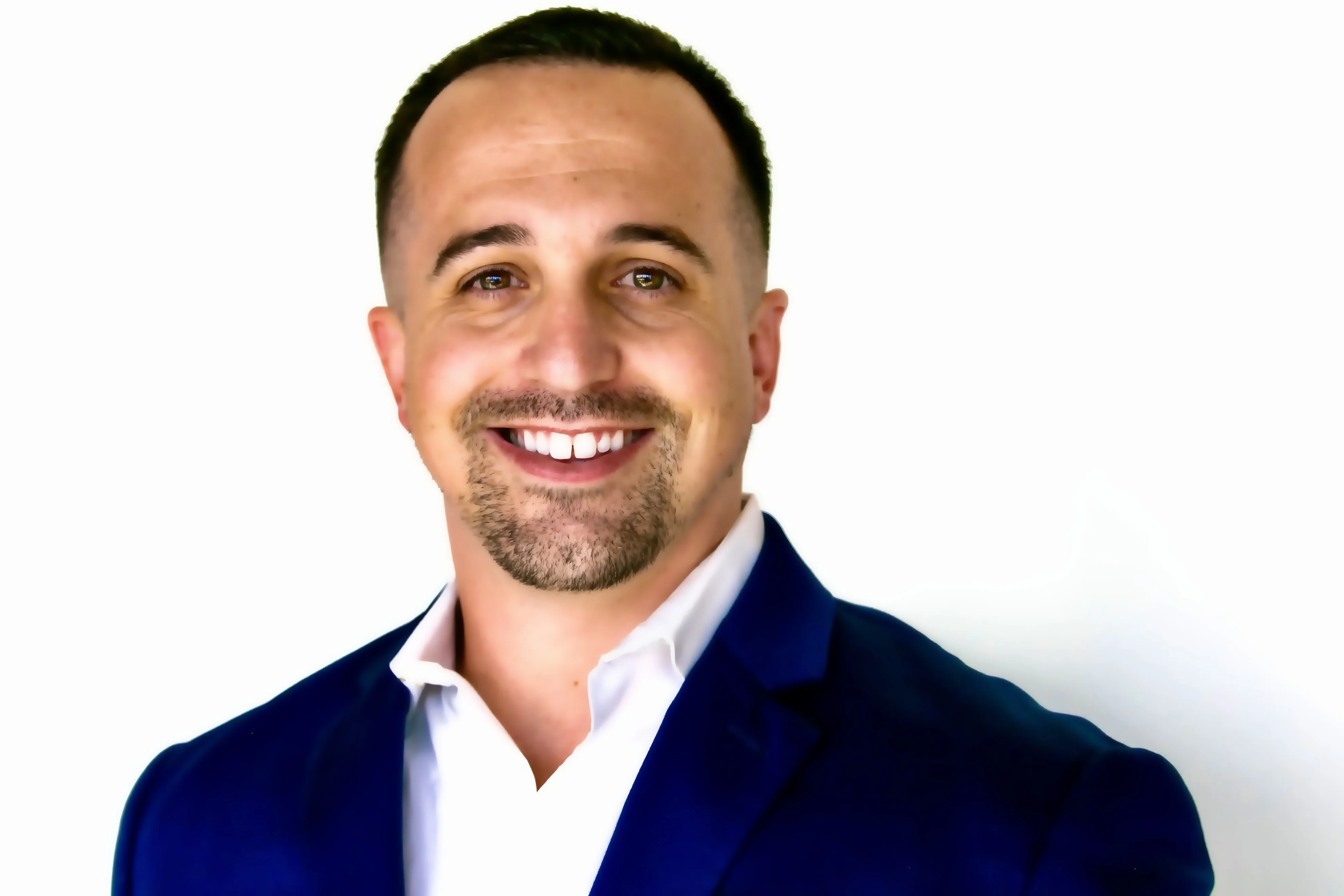
Justin Borges founded The Answer Engine in 2025 after 13+ years in real estate, $200M+ in production, and discovering that AI search rankings now decide who gets cited as the answer. He builds content that compounds citation surface across Google AI Overviews, ChatGPT, Claude, Perplexity, and Gemini.Claim your market territory — one client per area.
Frequently Asked Questions
Do personal injury lawyers show up on ChatGPT?
Some do, but most do not. ChatGPT and other AI platforms recommend PI lawyers when a firm has structured content that directly answers legal questions, documented case outcomes, and a strong third-party mention profile across Avvo, Google, and Martindale. Firms that rely solely on paid directories or traditional SEO are generally absent from AI-generated recommendations.Run your free AI Blind Spot Scan.
How do I get my law firm recommended by AI search?
Build content in four specific categories: case result summaries, FAQ and legal explainer content by case type, local jurisdiction knowledge tied to your specific courts, and client outcome narratives with specific details. Add FAQPage and LegalService schema, and build review volume on Avvo, Google, and Martindale. Consistency over 90 days produces measurable AI citation improvement.Book a free 30-minute strategy call.
Does Avvo rating help with AI search visibility?
Yes, but not through your Avvo rating score directly. Avvo content — specifically peer endorsements, client reviews, and published Q&A answers — is indexed and referenced by AI platforms as third-party evidence of expertise. A high Avvo rating alone adds little. What matters is whether your Avvo profile contains detailed, specific content that AI can parse and cite. Email support@theanswerengine.ai to get started.
How long does it take for a PI firm to show up in AI results?
Most PI firms see their first meaningful AI citations within 60 to 90 days of a structured content program that targets AI retrieval specifically. Firms that already have strong domain authority and review volume can appear in 30 to 45 days. Building to consistent, recurring citations across multiple AI platforms typically takes 4 to 6 months.(213) 444-2229
What content do AI platforms cite most for personal injury lawyers?
AI platforms most frequently cite PI content that includes specific case type expertise by geography, documented outcome data even without client names, and FAQ-format content that directly answers the questions injury victims ask. Content covering a single case type in one specific city consistently outperforms broad general content in AI citation frequency.
Ready to Get Your Firm Cited by AI?
The Answer Engine builds the content infrastructure that makes it happen. We design the hub-and-spoke architecture, write the case-type content, implement the schema, and track your citation growth across every major AI platform.