
- The AI Search Reality for Law Firms
- Why Directories Dominate AI Recommendations
- The 4 R's Framework for Law Firm AI Visibility
- How AI Ranks Trust Signals for Legal Professionals
- What AI Sees: Your Website vs Legal Directories
- 5 Mistakes That Make Your Firm Invisible to AI
- Is Your Firm Visible to AI? Decision Matrix
- How a Client Uses AI to Find an Attorney
- The 4 R's Checklist: Law Firm AI Visibility
- Frequently Asked Questions
The AI Search Reality for Law Firms
A potential client gets into a fender-bender. Instead of opening Google and scrolling through 10 blue links, they open ChatGPT and type: "What should I do after a car accident and who are the best personal injury attorneys near me?" In about four seconds, they have a recommendation. Either your firm is in it or it is not. Markets fill fast. Check your territory availability.
This is not a hypothetical. 78% of legal professionals now use AI, up from just 23% in 2023. ChatGPT alone is used by 66% of legal professionals. Microsoft Copilot has 42% penetration, and Google Gemini sits at 24%. These are not experimenting anymore. The adoption is mainstream, and the people searching for legal help are increasingly using the same tools their attorneys use. Your first step: free AERO Blind Spot Scan.
The problem for most law firms is structural. The way AI systems source attorney recommendations has almost nothing to do with how well your website ranks on Google. AI platforms do not perform a live search and rank results. They draw on training data, crawlable web content, and structured sources to build recommendations from the ground up. And the sources they trust most are not individual law firm websites. Claim your free call before your market fills.
A law firm that ranks on page one of Google is not automatically recommended by ChatGPT or Gemini. AI systems evaluate trust signals, directory presence, and credential depth, not keyword rankings. The two channels require different optimization strategies. Reach out: support@theanswerengine.ai.
Wondering if your firm is already showing up in AI recommendations? Call us at (213) 444-2229 today.
Get Your Free Blind Spot ReportWhy Directories Dominate AI Recommendations
When researchers analyzed the sources that feed AI training data for legal recommendations, the findings were stark. Solo and small firm websites are between 1,000 and 70,000 times less visible than major legal directories in the data that AI systems learn from. That is not a small gap. That is a different universe. Lock in your exclusive territory now.
The directories that dominate AI training data are not obscure platforms. Avvo hosts over 1.3 million attorney profiles. FindLaw has over 1 million. Martindale-Hubbell, Super Lawyers, and Justia collectively add millions more. These platforms have been building structured, verifiable attorney data for years or decades, and AI training pipelines trust that scale and consistency. Get your free AI readiness report.
Your firm website, even a well-designed one, contains a handful of pages about a handful of attorneys. The data footprint simply cannot compete on its own. This is why law firms that win AI search do not fight the directories. They work through them. Ready to act? Book a free strategy session.
The directory gap cuts both ways. If your competitors have not optimized their directory profiles, a well-built presence on Avvo, Martindale, and FindLaw can give your firm a significant lead. Most law firm marketing budgets still go almost entirely toward website SEO, leaving directory optimization wide open. Drop us a line at support@theanswerengine.ai.
The firms showing up repeatedly in AI recommendations for competitive terms like "best DUI attorney in [city]" or "top family law firm near me" share one common trait: they have treated directory presence as a primary channel, not an afterthought. Speak to an AEO specialist: (213) 444-2229.
This also connects to a broader point about how AI systems build recommendations. They are not just looking for any mention of your firm. They are cross-referencing multiple sources to verify that what they know about you is accurate and trustworthy. The more sources that agree on the same verifiable facts about your firm, the more confident the AI becomes in recommending you. That cross-referencing behavior is exactly why consistent directory presence matters so much. For more on how this works at the technical level, see our guide on what your website looks like to an AI crawler. One client per city. See if your market is available.
The FrameworkThe 4 R's Framework for Law Firm AI Visibility
After analyzing which law firms consistently appear in AI recommendations across ChatGPT, Gemini, Perplexity, and Claude, a clear pattern emerges. The firms that win share four categories of signals. We call this the 4 R's framework: Ratings, Reviews, Recognitions, and Roots. Check where you stand: free Blind Spot Scan.
Your star ratings on Google, Avvo, and Martindale-Hubbell. AI platforms pull these scores as fast, quantifiable trust signals. A low or missing rating is a recommendation blocker. Schedule a free 30-min call.
Client and peer sentiment in written form. AI systems parse review text for specific outcomes, practice area terms, and sentiment patterns. Volume plus recency plus specificity all matter. Email support@theanswerengine.ai for a custom strategy.
Third-party validations: Super Lawyers listings, Best Lawyers designations, bar certifications, published articles, speaking engagements. These are the external authority signals AI weighs most heavily. Questions? Call (213) 444-2229.
How complete and consistent your directory profiles are across Avvo, Martindale, FindLaw, Justia, and Super Lawyers. Incomplete profiles send weak signals. Inconsistent data causes AI to distrust recommendations. Secure your territory before a competitor does.
These four categories are not independent. They work as a reinforcing system. A firm with strong Ratings but weak Roots will be outranked by a firm that is moderately strong across all four. AI platforms are looking for convergent evidence, multiple signals pointing to the same conclusion about your credibility. See your AI visibility score — free.
The 4 R's framework matters because it gives law firms a diagnostic tool. If your firm is not appearing in AI recommendations, you can usually trace it back to a specific weakness in one of these four areas rather than needing a complete rebuild of your marketing strategy. Book your free consultation here.
Want to know exactly which of the 4 R's your firm is missing? We map that out in every Blind Spot Report. Contact us at support@theanswerengine.ai.
Get your free analysisHow AI Ranks Trust Signals for Legal Professionals
Not all trust signals carry equal weight. AI platforms apply additional scrutiny to legal content because it falls under what Google classifies as Your Money or Your Life (YMYL) content. Bad legal advice can cause real harm. This means the quality threshold for legal recommendations is higher than for most other industries. Reach us at (213) 444-2229.
Here is how the major trust signals rank by influence in AI recommendation decisions for attorneys: We work with one business per market. Check if yours is still open.
Relative influence scores based on AI recommendation pattern analysis. Not official platform data. Find your gaps with a free AERO scan.
The standout finding here is that verified credentials rank highest. This makes sense given the YMYL classification of legal content. AI platforms need to know that the attorney being recommended is actually licensed to practice law. An Avvo profile that clearly lists a bar admission number, law school, and years of experience carries far more weight than a website bio that says "experienced attorney." Schedule a free call to see where you stand.
The relationship between reviews and schema is also worth noting. Schema markup without reviews is a technical signal with no social proof. Reviews without schema require AI systems to infer structure from unformatted text. The combination of both is meaningfully stronger than either alone. For a deeper look at how schema affects AI recommendations, see our guide on whether schema markup helps AI search. Send your questions to support@theanswerengine.ai.
Side by SideWhat AI Sees: Your Website vs Legal Directories
One of the most useful exercises for any law firm is to look at your online presence from an AI system's perspective. Here is a direct comparison of what a typical law firm website provides versus what a well-built legal directory profile provides: Call (213) 444-2229 for a free consultation.
| Signal Type | Law Firm Website | Legal Directories |
|---|---|---|
| Verified bar credentials | Inconsistent | Standardized |
| Attorney profile completeness | Variable | Structured fields |
| Client reviews | Rarely present | Platform-verified |
| Practice area taxonomy | Often marketing-heavy | Standardized categories |
| Peer endorsements | Not present | Avvo endorsement system |
| Awards and recognitions | Self-reported only | Third-party verified |
| Training data volume | Minimal footprint | Millions of profiles |
| Cross-source consistency | Single source | Multi-platform corroboration |
This does not mean your website is irrelevant. It means your website needs to work with your directory presence, not instead of it. The website is where you demonstrate topical authority and house your case results. Directories are where AI systems go to verify that you are a real, credentialed, trusted legal professional. Both layers need to be strong. Claim your market territory — one client per area.
Common Mistakes5 Mistakes That Make Your Firm Invisible to AI
Most law firms making updates to their AI visibility are not starting from zero. They are correcting specific mistakes that are actively suppressing their recommendations. Here are the five most common: Run your free AI Blind Spot Scan.
Avvo is one of the most heavily weighted sources in AI training data for attorneys. A missing or skeleton profile is a direct absence from the dataset AI platforms consult. This is the single most common issue we see in law firm AI visibility audits. Book a free 30-minute strategy call.
Phrases like "experienced team of dedicated attorneys" carry zero weight with AI systems. AI platforms look for specific, verifiable claims: years of practice, bar admission year, number of cases handled in a practice area, specific outcomes. Vague marketing language is filtered out as low-signal content. Email support@theanswerengine.ai to get started.
Without schema markup, AI crawlers must infer your firm's practice areas, service locations, and attorney credentials from unstructured text. That introduces uncertainty into the recommendation. Schema is how you tell AI systems exactly what you do and who you are in language they parse reliably. (213) 444-2229
AI systems weight case results very highly for law firms because they represent real-world evidence of competence. But case results listed as "successful outcomes across multiple practice areas" are useless. Results with specifics, like settlement amounts, case types, and outcomes, are the kind of verifiable evidence AI systems can cite with confidence.
Legal content that reads as generic, AI-generated text is increasingly recognized and deprioritized by AI recommendation systems. Content needs a genuine attorney perspective, specific citations to statutes or case law, and a clearly identified author with verifiable credentials. AI platforms can detect and downrank generic AI-generated legal content at scale.
Content with statistical citations and clear factual claims is up to 40% more likely to be cited by AI. Specific case results, peer endorsements on Avvo, Super Lawyers listings, and published legal commentary all drive measurable lifts in AI recommendation frequency. These are not expensive interventions. They require discipline, not budget.
Is Your Firm Visible to AI? Decision Matrix
Use this matrix to get a quick read on where your firm stands across the key dimensions of AI visibility:
| Check | Strong | Weak | Missing |
|---|---|---|---|
| Avvo profile is complete and rated | Score 8+ / all fields filled | Partial profile, some reviews | No profile at all |
| Martindale-Hubbell listing | AV Preeminent rated, full bio | Listed but minimal info | Not listed |
| Google Business Profile | Fully optimized, 50+ reviews | Listed, few reviews | Not claimed |
| Website LegalService schema | Full schema with all attorneys | Basic schema only | No schema |
| Case results on website | Specific outcomes with details | General mentions only | None published |
| Super Lawyers or Best Lawyers | Listed, profile linked | Nominated, not yet listed | Never applied |
| Practice area pages | Deep, specific content per area | Generic overview pages | Single services page |
| Attorney bio credibility | Bar number, JD, years, cases | Name and photo only | No bio page |
If you have three or more items in the "Missing" column, your firm almost certainly has a significant AI visibility gap. If most items are "Weak," you are partially visible but losing recommendations to better-optimized competitors. The "Strong" column is the target state.
It is also worth understanding how AI recommendations interact with review signals. Our analysis of why certain businesses with seemingly weaker profiles still get recommended has some counterintuitive implications for law firms. Read more in our piece on why AI recommends businesses with worse reviews.
Not sure where your firm falls on this matrix? We do the analysis for you in a free Blind Spot Report.
Get the Free ReportHow a Client Uses AI to Find an Attorney
Understanding the path a potential client takes from problem to retained attorney helps clarify where your firm needs to be visible. Here is a realistic timeline of how this plays out in 2026:
A car accident, a served divorce petition, an employer termination. The client has an immediate legal problem and does not know where to start.
They open ChatGPT, Gemini, or Perplexity and ask a broad question: "What should I do after a car accident?" or "Do I need an attorney for a wrongful termination?" They want information, not a firm recommendation yet.
The AI answers their question and, in most cases, includes context about what type of attorney handles this. Firms with strong topical authority content on their practice area pages start appearing here as cited sources.
Now they ask directly: "Who are the best personal injury attorneys in [city]?" This is where your 4 R's profile is evaluated. AI pulls from Avvo ratings, Google reviews, directory presence, and recognition signals.
The client takes the AI recommendation and does follow-up research. They visit the firm website, read reviews, check the attorney bio. Weak website credibility kills conversions even after a positive AI mention.
The client calls, emails, or fills out a form. Firms that appeared in the AI recommendation and then reinforced trust in the verification phase win the conversion.
The implication is that law firm AI visibility is not just about appearing in one recommendation. It is about being present at multiple touchpoints in this journey, from the initial informational query to the final decision verification. A firm that shows up in step four but has a weak website fails in step five.
ChecklistThe 4 R's Checklist: Law Firm AI Visibility
Use this cheat sheet to evaluate and prioritize your AI visibility work. Items are organized by the 4 R's framework and sorted by impact:
The firms that win AI search long-term are the ones that genuinely deserve to be recommended. AI systems are increasingly good at detecting manufactured signals. The checklist above works because it aligns your online presence with what AI systems are actually trying to measure: real expertise, real credentials, and real client outcomes.
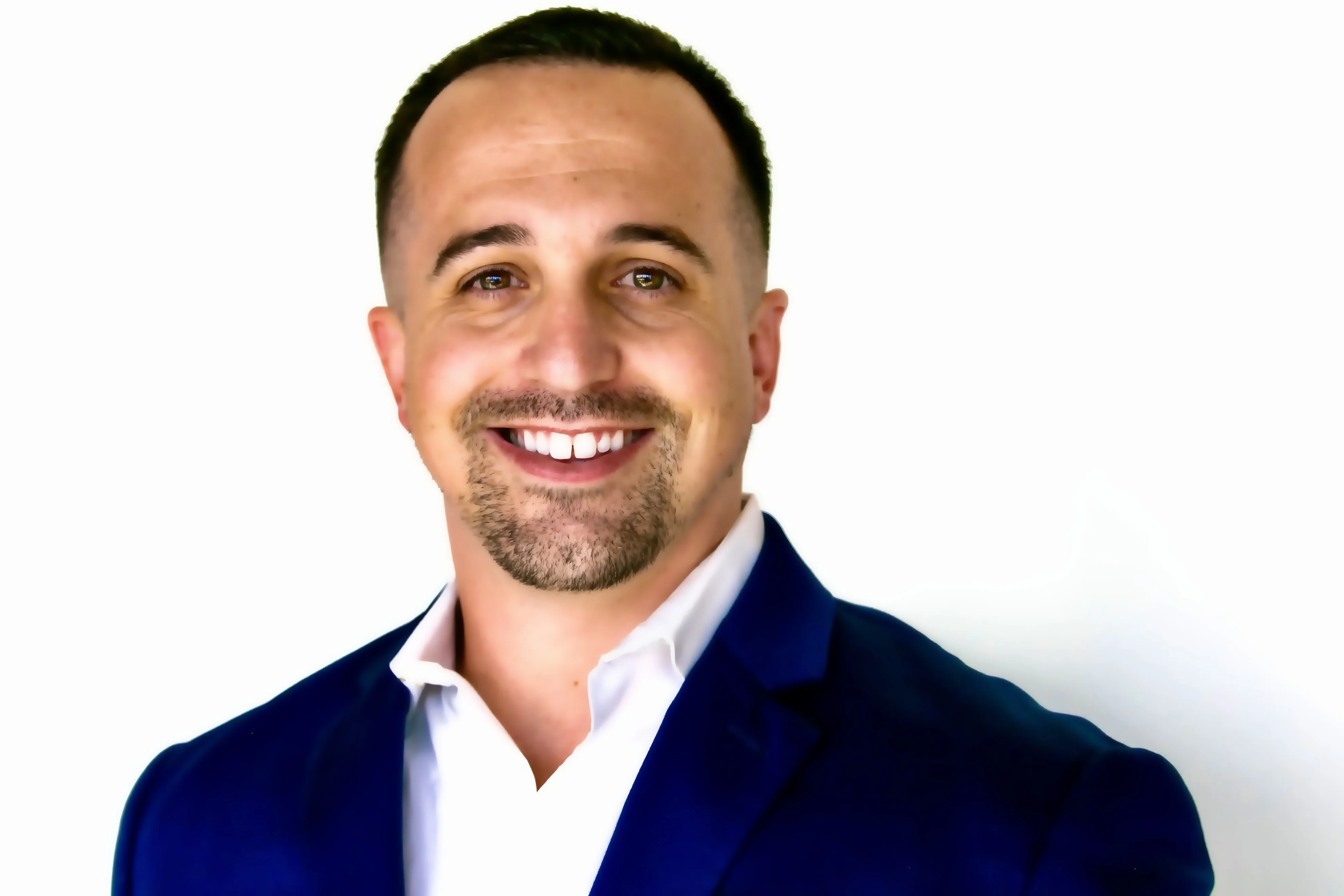
Justin Borges founded The Answer Engine in 2025 after 13+ years in real estate, $200M+ in production, and discovering that AI search rankings now decide who gets cited as the answer. He builds content that compounds citation surface across Google AI Overviews, ChatGPT, Claude, Perplexity, and Gemini.
Is Your Law Firm Showing Up When Clients Ask AI?
Find out exactly where your firm stands in AI recommendations with a free Blind Spot Report. We show you which competitors AI is recommending and why.
Get Your Free Blind Spot ReportFrequently Asked Questions
Why do legal directories rank so much higher than law firm websites in AI results?
What does the 4 R's framework mean for law firms?
Does having an Avvo profile actually help with AI search visibility?
What is LegalService schema markup and why does it matter?
Can a small law firm compete with large firms in AI search?
How long does it take for AI search optimization to produce results for a law firm?
Related Reading
The PI Firm That Gets Cited by AI Gets the Case
ChatGPT recommends specific lawyers. Perplexity cites specific firms. Google AI Overviews name names. The Answer Engine puts your PI firm in those citations — and keeps competitors out. Free citation audit. One firm per market.
Run Free PI Citation Audit →