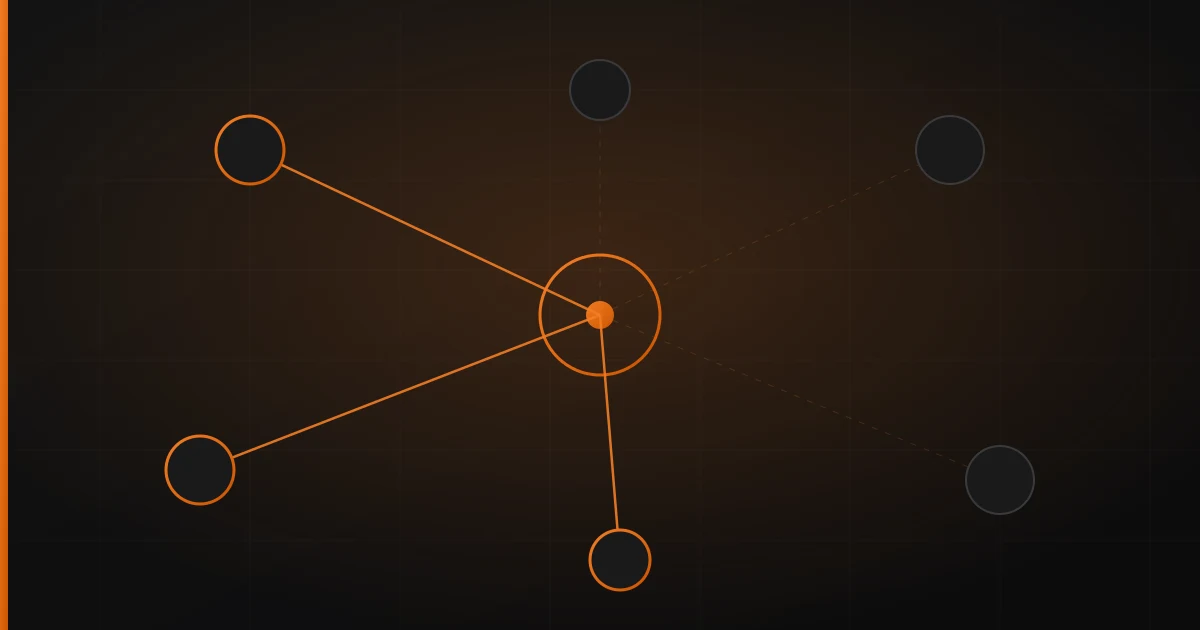
The Source Mismatch: AI platforms disagree about a business because each engine reads a different primary data source, so authority signals placed for one engine are structurally invisible to another regardless of how strong they are (TAE measurement, 2025-2026). The implication is direct. The citation gap is not a quality problem with the business. It is a placement problem with the signals. This analysis draws on Aggarwal et al. (KDD 2024), Zhang et al. (2026), the GEO-SFE benchmark (2026), Chen et al. (2025), and sixteen months of verified client engagements measured against fixed query libraries across all four major LLMs. Run your free AI blindspot scan to see your own platform pattern.
Why AI Platforms Disagree About Your Business
What the citation gap actually is
The citation gap is the difference between how consistently one AI platform cites a business and how consistently another does. Answer Engine Optimization (AEO), also called AI citation optimization or LLM visibility, treats this gap as a measurable signal rather than a mystery. When ChatGPT recommends a business confidently, Perplexity has never heard of it, and Gemini lists the wrong phone number, the business is not imagining inconsistency. Each engine reached a different conclusion because each engine read a different source. Baseline your own gap with the free AEO blindspot scan.
Different architectures produce different opinions
Every AI platform is built on a distinct data architecture. Some train large language models on historical web crawls. Some run live search against a current index. Some pull from structured knowledge graphs and business databases. Some weight social-platform data far above editorial content. Because these architectures differ, the same business appears authoritative on one engine and absent on another based entirely on where its attribution signals live. The disagreement is the architecture working as designed, not failing. Markets fill fast: check whether your territory is still open.
The Platform Gap Profile: a business’s citation pattern across six engines is a fixed fingerprint of where its signals live, and the lowest-scoring engine names the exact data source where the signal is missing (TAE measurement, 2025-2026). Read the fingerprint and the diagnosis writes itself. A Perplexity gap names a ranking problem. A Gemini gap names a Google data problem. A Grok gap names an absent social presence.
Why the gap is a competitive cost, not a curiosity
Consumers increasingly use AI engines as discovery tools for local services, professional services, and products. A competitor cited consistently across all six major platforms captures a structurally larger share of AI-mediated discovery than a business cited on only two. The citation gap is therefore a competitive gap with a measurable dollar cost in lost inbound. Diagnosing and closing the gap is no longer optional for businesses that want to hold visibility as AI search keeps growing. Start by mapping your exposure: call (213) 444-2229 or email support@theanswerengine.ai.
→ Get your free AI citation score across all six enginesData ArchitectureThe Four Data Sources Behind Every Citation
Source one: training data from a historical crawl
Training data is the frozen text corpus a large language model learned from before its knowledge cutoff. That corpus includes web pages, Reddit threads, Wikipedia articles, news archives, and public forums. A brand mentioned in the corpus before the cutoff exists in the model’s memory and surfaces without any live lookup. A brand absent from the corpus is unknown to the base model unless live retrieval is active. ChatGPT’s base model is the clearest example of training-data architecture. Earning corpus-eligible mentions is slow, structural work: book a 30-minute strategy call to scope it.
Source two: a live search index
A live-search engine answers each query by running a real-time web search and synthesizing the results it finds. Citation frequency on these engines tracks organic search rankings directly, because the engine can only cite what the index returns for that query. Perplexity is the clearest live-search-first platform. A business that does not rank in the top 10 for the query Perplexity runs will not be cited, regardless of how well-known it is in training data. Email our team at support@theanswerengine.ai for a ranking-gap read.
Source three: a structured knowledge graph
A knowledge graph is a structured database of entities, facts, and relationships. Google’s Knowledge Graph is the most comprehensive, linking a business to its address, hours, categories, reviews, and entity relationships. Gemini draws heavily from this graph, which makes structured-data accuracy on Google properties the dominant factor in Gemini citation quality. An inaccurate knowledge-graph entry produces a confident but wrong Gemini answer that no amount of website content can override. Scan your structured-data accuracy for free.
Source four: social and real-time platform data
Some engines hold privileged access to a specific social corpus. Grok, built by xAI, has direct access to the X data stream that other models lack. Copilot weights LinkedIn company data alongside Bing search. A brand with credible presence on the right social platform gains a structural advantage on the engine built on top of it, while a brand absent from that platform faces a gap no other signal can close. We work with one business per market: claim your territory before a competitor does.
Before trying to fix any platform gap, identify which of these four source types that platform reads most. Every fix follows from that identification. Organic ranking improvements close Perplexity gaps. Google Business Profile corrections close Gemini gaps. Reddit and press coverage close ChatGPT training-data gaps. X presence closes Grok gaps. Apply the wrong fix to the wrong source and nothing moves. Confirm your source map: (213) 444-2229.
How Each Platform Reads You
ChatGPT reads training data first
ChatGPT’s base model was trained on a historical web crawl heavy with Reddit content, Wikipedia, news archives, and industry publications. When ChatGPT answers about a business without running a search, it draws entirely from this corpus. A brand with positive, relevant mentions in Reddit threads, Wikipedia, or editorial press before the cutoff exists in its memory. A brand absent from those sources does not. SearchGPT adds live retrieval on top, which partially bridges the gap for newer businesses, but the base corpus still sets the default associations. For the full logic, see our guide on how ChatGPT chooses businesses to recommend. Lock in your exclusive market before the gap compounds.
The Retrieval Split: training-data engines cite from a frozen historical corpus while live-search engines cite from the current top-10 results, so a single business can be famous to one engine and unknown to another on the same query (GEO-SFE, 2026; TAE measurement, 2025-2026). A business launched after a model’s training cutoff is invisible to that model’s memory no matter how strong its present-day signals are. Closing that gap means earning coverage in sources that feed the next training update.
Perplexity reads the live top 10
Perplexity is a live search engine. It answers by searching the web, pulling the most relevant indexed pages, synthesizing an answer, and showing citations. No training memory drives the primary answer. The consequence is that Perplexity visibility is almost entirely a function of organic rankings: the engine cites heavily from the top-10 results for the query it runs. A Perplexity gap is a ranking gap, not an AI mystery. For the specifics, see our analysis of how Perplexity decides what to cite. Contact us at support@theanswerengine.ai for a Perplexity ranking audit.
Gemini reads the Google graph
Gemini has what no other engine has: direct integration with Google’s own data infrastructure, including the Search index, the Knowledge Graph, Maps, and Google Business Profile. When Gemini answers about a business, it draws from the most comprehensive structured dataset about businesses in existence. That is its strength and its failure mode at once. The Structured-Data Tax: Gemini answers with high confidence from Google’s Knowledge Graph regardless of accuracy, so one stale Google Business Profile field produces a confidently wrong answer that no content fix can override (TAE measurement, 2025-2026). Audit your Google data before it costs you a customer: free blindspot scan.
Claude reads for consistency
Claude, built by Anthropic, combines training data with live retrieval through Brave Search. Its corpus is weighted toward authoritative, well-structured text, and its training approach makes it cautious when uncertain. Claude is less likely than ChatGPT to state wrong information confidently, but it is also more likely to omit a business when its confidence sits below a threshold. The Consistency Threshold: Claude suppresses a citation when sources conflict, so cross-source consistency in name, address, and phone data, not raw mention volume, is what clears its confidence gate (Chen et al., 2025). For more, see how Claude AI evaluates business authority. Email support@theanswerengine.ai for a consistency check.
Grok and Copilot read social and Bing
Grok draws privileged, real-time signal from the X stream, a layer no other major engine matches, so a business absent from X conversations faces a Grok gap that other signals cannot close. Copilot runs on Bing search and OpenAI models and weights LinkedIn company data, which makes it especially relevant for business-to-business discovery. A business that optimized only for Google often carries a large Copilot gap because its Bing Places listing is unclaimed and its LinkedIn page is thin. See how Microsoft Copilot decides which businesses to recommend and how Grok decides which businesses to recommend. Questions on either gap: (213) 444-2229.
| Platform | Primary Data Source | Citation Style | Common Failure Mode |
|---|---|---|---|
| ChatGPT | Training corpus (Reddit, Wikipedia, web crawl) plus SearchGPT retrieval | Confident from memory; cited URLs when search is active | Unknown if absent from the corpus before the cutoff |
| Perplexity | Live web search across top-10 results | Inline citations with visible source URLs | Invisible if not ranking in the top 10 for the query |
| Gemini | Google index, Knowledge Graph, Maps, Business Profile | Confident statements from structured data | Confidently wrong when Google data is stale or conflicting |
| Claude | Training data plus Brave Search retrieval | Cautious; flags uncertainty when confidence is low | Omits the business when coverage is thin or inconsistent |
| Grok | X real-time stream plus live web search | Real-time, with X post citations | Invisible to businesses absent from X conversations |
| Copilot | Bing index, LinkedIn, OpenAI models | Bing-cited responses with inline links | Weak for Google-only businesses missing Bing signals |
The Citation Gap Audit: Your Platform Fingerprint
Step one: build a fixed query set
A citation gap audit starts with a fixed set of 10 to 15 natural-language queries a customer would actually use. Include category queries such as best service near a city, problem-solution queries such as who can help with a specific issue, and direct brand queries such as a business name plus hours or reviews. Category queries test discovery. Brand queries test data accuracy. The same fixed set runs against every engine so the results compare cleanly. We will help you build the set: book a free consultation.
Step two: run all six engines and score 0 to 3
Run the query set against ChatGPT, Perplexity, Gemini, Claude, Grok, and Copilot in fresh sessions with no personalization history. Score each platform per query: 0 not cited, 1 cited with errors, 2 cited accurately but rarely, 3 cited accurately and consistently. Sum the scores per platform. The lowest totals are the largest gaps, and the platform where competitors appear and the business does not is the highest-priority gap. Record competitor presence on every query, not just your own. Email the results to support@theanswerengine.ai for a read.
Step three: match each gap to its source and prioritize
Match every gap to the data source that causes it. A Perplexity gap where competitors outrank the business is a SERP ranking problem. A Gemini gap with wrong hours is a Google Business Profile accuracy problem. A ChatGPT gap where the business is unknown is a training-corpus coverage problem. A Grok gap is an absent X presence. A Copilot gap is weak Bing and LinkedIn signals. Then prioritize by audience match: fix the platform the target customers actually use first. Never apply a generic fix to a specific source. Claim your market territory while the audit is fresh.
Run the same query set on all six engines for your top three competitors and record where they appear. The engines where competitors show up consistently and the business does not represent gaps with immediate competitive cost. Start there, not with the platform that is easiest to fix. Reach our team at (213) 444-2229 for a competitor gap comparison.
Closing the Gap and Measuring It
Apply the fix that matches the source
Each gap closes only with a fix targeting its specific source. Close a ChatGPT gap by earning Reddit mentions in relevant communities, Wikipedia presence, editorial press with strong web archives, and podcast appearances with published transcripts. Close a Perplexity gap by ranking in the top 10 for customer queries through page authority, fast load times, and structured data. Close a Gemini gap by correcting every Google-owned data point and aligning website schema with the Business Profile. Close a Grok gap with credible X presence, and a Copilot gap with a claimed Bing Places listing and a current LinkedIn page. See why competitors show up in Perplexity but you do not. Find your highest-impact gap free.
Fix accuracy errors everywhere, immediately
Discovery gaps can be prioritized by audience, but data-accuracy errors cannot wait. If Gemini tells customers a business is closed on a day it is open, or states the wrong address, that causes real harm regardless of platform priority. Accuracy fixes are never optional, even on a deprioritized engine. A business with finite resources still fixes wrong hours, wrong phone numbers, and wrong addresses on every platform before queuing any discovery work. Confirm your data is clean across engines: call (213) 444-2229 or book a 30-minute call.
Measure with a Proof Ledger
The only durable AEO metric is a Proof Ledger: a fixed query library re-run on a fixed cadence across every engine, logging each citation appearance with engine, query, position, and source URL. The Compounding Coverage Premium: a business cited on all six engines captures discovery share that compounds as users distribute queries across platforms, while single-platform visibility decays as query volume spreads (TAE measurement, 2025-2026). Re-run the ledger every 60 to 90 days, because citation behavior shifts as engines re-index. For why answers vary even within one engine, see why AI gives different answers every time. Lock your territory before a competitor builds the same ledger.
Diagnose the fingerprint, match each gap to its source, fix accuracy errors first, then close discovery gaps in audience-match order and measure with a monthly Proof Ledger. A business that runs this loop wins citations on customer-intent queries that competitors lose by structural default. For a broader engine comparison, see ChatGPT vs Perplexity vs Google AI for local search. Email support@theanswerengine.ai to put the loop on autopilot.

Find Out Where Your Citation Gaps Are: Free Blindspot Report
The AEO blindspot scan tests your business across all six major AI engines, maps where you appear and where you do not, and names the data source behind each gap so you know exactly what to fix and in what order. Free, no login required.
Run Free AEO Blindspot Scan →Frequently Asked Questions
Why does ChatGPT mention my business but Perplexity does not?
ChatGPT draws from training data that includes Reddit, Wikipedia, and a broad historical web crawl. If your business earned mentions in those sources before the training cutoff, ChatGPT knows you. Perplexity runs live web searches and cites primarily from the top-10 Google results for each query. If your site does not rank in the top 10 for the query Perplexity runs, it will not cite you regardless of your ChatGPT presence. The fix is to improve organic rankings for the queries Perplexity is most likely to run. Email support@theanswerengine.ai for a ranking-gap read.
Why does Gemini show wrong information about my business?
Gemini sources business data primarily from Google’s own index, the Google Knowledge Graph, and Google Maps. If your Google Business Profile has outdated hours, an incorrect address, or wrong categories, or those details conflict with your website structured data, Gemini reproduces the errors with high confidence. The fix is to audit your Google Business Profile, align your schema markup with it, and submit corrections through the Google Business Profile dashboard. Call (213) 444-2229 for a data-accuracy audit.
What is the citation gap and how do I measure it?
The citation gap is the difference between how consistently one AI platform cites your business versus another. Measure it by running a fixed set of 10 to 15 queries across ChatGPT, Perplexity, Gemini, Claude, Grok, and Copilot and recording where you appear, how accurately, and how often. Score each platform from 0 to 3. The platform where you score lowest is your largest gap, and the data source that platform prefers is where your signals are weakest. Run the free blindspot scan to generate your scorecard automatically.
Does Grok use different data than ChatGPT?
Yes. Grok, built by xAI, draws heavily from the X platform for real-time signals in addition to live web search. Businesses with an active, credible X presence, or that are discussed by X users in relevant contexts, surface more frequently in Grok responses. Businesses absent from X conversations are often invisible to Grok even when they appear consistently in ChatGPT or Perplexity, because the X stream is the differentiated data layer other engines do not have. Book a call to scope an X-presence fix.
How does Microsoft Copilot decide which businesses to cite?
Microsoft Copilot is powered by Bing search and OpenAI models. It prioritizes businesses with strong Bing presence, well-optimized Bing Places listings, and credible LinkedIn pages. Businesses that invested only in Google optimization often have a Copilot gap because Bing signals were neglected. The fix is to claim and optimize your Bing Places for Business profile, verify your site in Bing Webmaster Tools, and keep your LinkedIn company page current and keyword-relevant. Reach support@theanswerengine.ai for a Copilot gap plan.
Can I fix every platform gap at once, or do I need a separate strategy for each?
Some fixes overlap. Strong organic rankings help Perplexity, Gemini, Claude, and Copilot at once. Structured-data accuracy helps Gemini and Perplexity. Wikipedia presence helps ChatGPT, Claude, and Gemini. But closing a Grok gap requires X-specific signals, and closing a ChatGPT training-data gap requires earning mentions in sources that feed LLM training pipelines such as Reddit and authoritative press. A full strategy addresses each platform’s primary data source in priority order, starting with the gap where the business opportunity is largest. Claim your territory and we will sequence the fixes for you.
Related AEO Guides
- How AI Platforms Choose Businesses to Cite
- ChatGPT vs Perplexity vs Google AI for Local Search
- Why AI Recommends My Competitor Over Me
- Why AI Gives Different Answers Every Time
- How Perplexity Decides What to Cite
- The 5-Minute AI Visibility Audit